


As the leaves turn brilliant shades of red, orange, and yellow, New Yorkers are hitting the road to enjoy some of the best that fall has to offer. From salmon fishing and camping trips to scenic hikes and leaf-peeping adventures, there’s no shortage of ways to get outside this season.
Unfortunately, we’re not always the only ones traveling. Invasive species are excellent hitchhikers and can be moved from place to place on firewood, vehicles, gear, and clothing. The good news? A few simple habits can make a big difference in protecting the forests, waterways, and trails we all enjoy.
This October, celebrate Firewood Month and explore our tips for enjoying fall adventures without the hitchhikers. Together, we can help stop the spread of invasive species while making the most of the season.
Gather Around the Campfire, Not the Pests
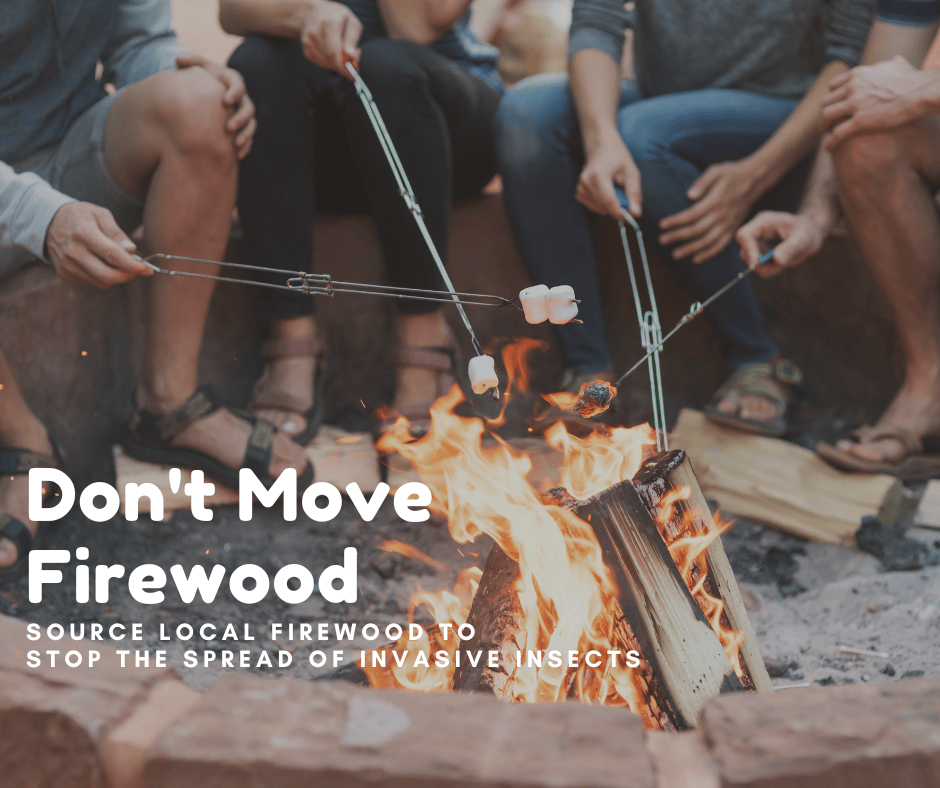
Nothing says fall like a campfire on a crisp autumn evening. Unfortunately, firewood can transport invasive insects and diseases long distances, introducing them to new forests and communities.
Protect the trees you love by:
- Buying firewood where you’ll burn it.
- Using certified, heat-treated firewood when appropriate.
- Burning all your firewood before leaving your campsite.
- Leaving unused firewood behind rather than transporting it to a new location.
Fishing for Salmon: Help Protect Your Favorite Fishing Spots
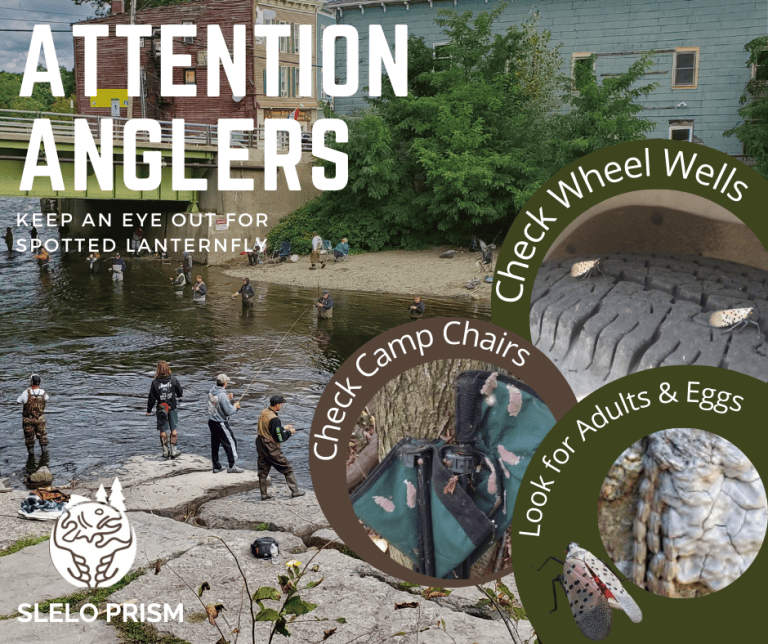
As anglers travel to streams and rivers across the state, invasive species can hitch a ride on vehicles, gear, and equipment.
Before and after your trip:
- Inspect your vehicle, trailer, and equipment for spotted lanternfly adults and egg masses.
- Report spotted lanternfly observations to NYiInvasives.org
- Destroy any spotted lanternflies or egg masses you find.
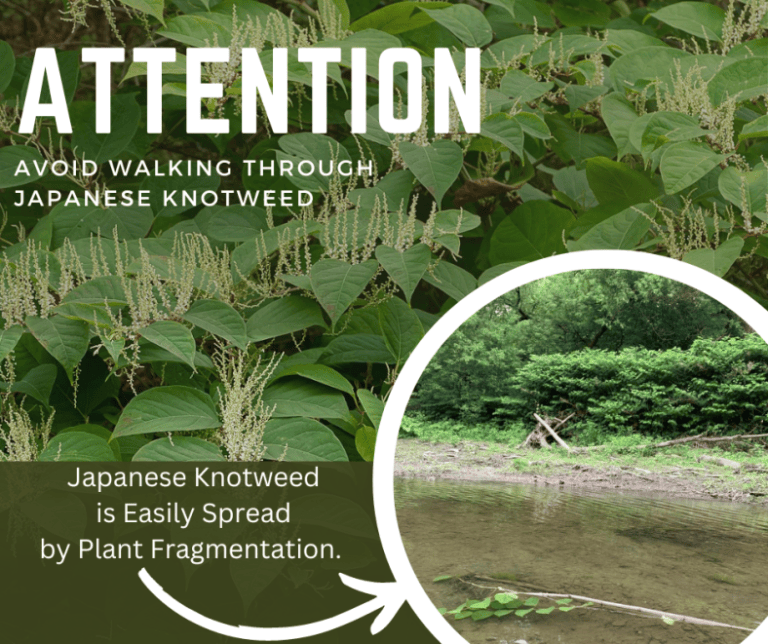
Walking along the riverside to cast your line? Be sure to avoid walking through invasive knotweed patches. New plants can form from broken branches that hit the ground or fall into the water.
- Check boots and gear for plant fragments before leaving the area.
- Remove mud and vegetation before visiting another waterbody.
Leaf Peeping with a Purpose
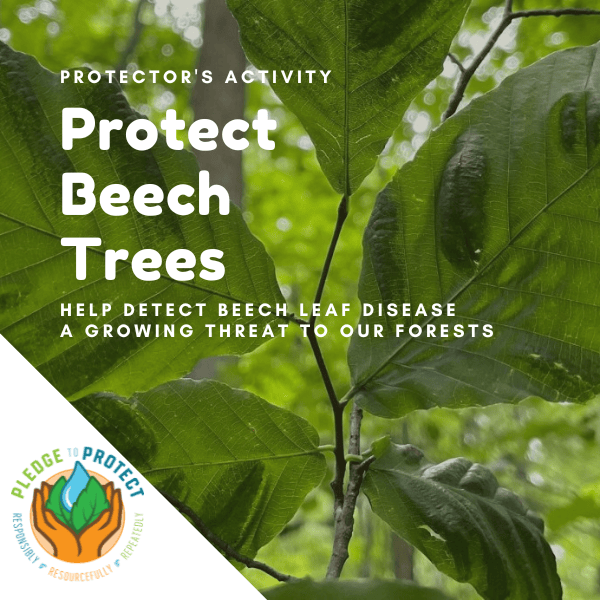
Fall is the perfect time to enjoy New York’s spectacular foliage. While you’re taking in the views, consider becoming an extra set of eyes for our forests.
Keep an eye out for beech leaf disease, an invasive forest disease affecting American beech trees.
Signs to watch for:
- Dark striping between leaf veins.
- Leaves with a leathery texture.
- Curled, distorted, or unusually thick leaves.
If you suspect beech leaf disease, report your observation through NYiMapInvasives.
Every report helps scientists and land managers better understand where the disease is spreading.
The Pledge to Protect was developed by the St. Lawrence Eastern Lake Ontario Partnership for Regional Invasive Species Management (SLELO PRISM). It is a resource intended to inform and inspire you to protect your lands and waters from the impacts of invasive species. Upon taking the Pledge, you become a “Protector” and are sent monthly email blogs that provide simple actions you can take to protect your favorite outdoor spaces from invasive species and chances to win prizes by taking the suggested actions.
Take the Pledge to Protect TODAY !
About SLELO PRISM
SLELO PRISM (St. Lawrence–Eastern Lake Ontario Partnership for Regional Invasive Species Management) is part of New York State’s collaborative PRISM network, which works to prevent, detect, and manage invasive species to protect native habitats, biodiversity, and freshwater resources. Hosted by The Nature Conservancy, SLELO focuses its efforts within Oneida, Oswego, Jefferson, Lewis, and St. Lawrence counties.
The statewide PRISM network is funded by the NYS Environmental Protection Fund and coordinated by the NYS Department of Environmental Conservation and partners. Its mission is to provide a unified, statewide approach to invasive species management by coordinating local partners, training volunteers, conducting outreach, and implementing control and restoration efforts across eight regions.
Learn more about SLELO PRISM at www.sleloinvasives.org.